
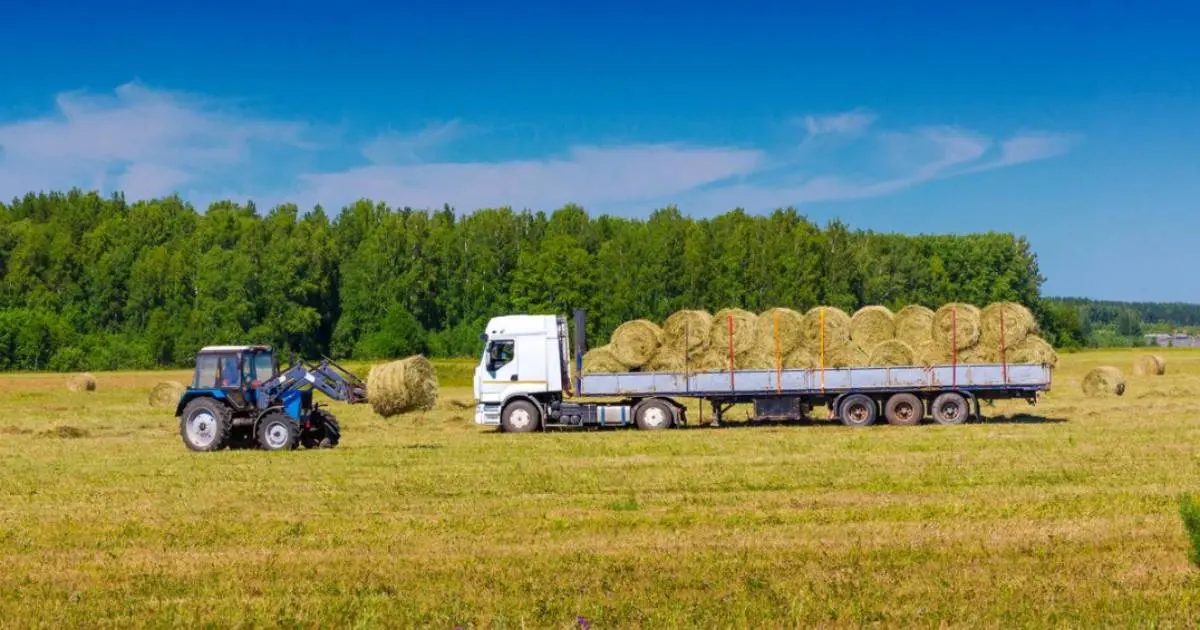
With a supply chain spanning multiple business units and transport partners, our customer needed a more connected way to manage warehousing, transportation and supply chain performance. Smartlog implemented Smartlog Transportation Management (STM), Smartlog Warehouse Management (SWM), a data integration layer and Control Tower to reduce fragmented information, improve real-time operational visibility and standardize reporting.
These solutions help establish a more unified supply chain management foundation, giving the business stronger control over inventory, transportation, carrier performance and operational data across a large-scale agricultural network.
ABOUT OUR CUSTOMER
Our customer is a leading enterprise in the agriculture and sugar industry, operating a large supply chain across multiple business units and a broad network of transport partners.
At this scale, managing inventory or delivery status at individual locations is not enough. The business also needs to connect information across warehouses, transportation operations, carriers and existing enterprise systems.
OPERATING CONTEXT
Before the project, ERP data did not always fully reflect actual operations. Teams had to consolidate information from multiple sources before management reports could be prepared.
Transportation planning still involved significant manual work. Carriers were coordinated mainly through Zalo and email, while delivery status was tracked through separate GPS systems operated by different partners.
Document and freight reconciliation were also typically performed on weekly or monthly cycles, creating a gap between day-to-day operations and the information available to management.
KEY CHALLENGES
Limited end-to-end supply chain visibility
Warehouse, transportation and delivery data were distributed across different sources. With individual carriers using separate tracking systems, gaining a consolidated view of the entire network was difficult.
Inconsistent operational data
Differences between system records and actual operations increased reconciliation work, slowed reporting and affected the speed of decision-making.
Heavy reliance on manual processes
Transportation planning, carrier coordination, document reconciliation, freight settlement and reporting all required data to be collected from multiple sources, increasing complexity as the supply chain expanded.
SMARTLOG’S APPROACH
Rather than addressing warehousing and transportation as separate problems, Smartlog designed an approach that connects operational execution with supply chain management.
Standardizing transportation with Smartlog STM
STM centralizes transportation and carrier data, creating a foundation for more consistent planning, execution and delivery monitoring.
Connecting warehouse data with Smartlog SWM
SWM manages warehouse operations and inventory data, allowing warehouse information to connect more closely with transportation and delivery activities.
Unifying data through Integration and Control Tower
The integration layer synchronizes data across business systems, while Smartlog Control Tower brings warehouse, transportation and reporting information into a unified management view.
This enables teams to monitor operations more centrally and identify exceptions earlier. Late deliveries can also be consolidated into automated reports by carrier, helping operations teams respond to issues more proactively.
RESULTS
Following implementation, warehouse, transportation and reporting data have progressively moved toward a more unified management architecture.
Delivery and inventory information are more closely connected with management reporting, reducing reliance on manual consolidation from multiple sources.
Automated late-delivery reporting also gives operations teams a more proactive way to identify issues and monitor carrier service performance instead of waiting for periodic reporting cycles.
BUSINESS VALUE
For a large agricultural supply chain, the value lies not in individual systems alone, but in the ability to connect operational activities through a consistent flow of data.
STM and SWM capture transportation and warehouse data at the execution level. The integration layer synchronizes information between systems, while Control Tower provides a consolidated view for management and decision-making.
This connected model gives the business a stronger foundation to manage inventory, deliveries, carrier performance and service quality across the supply chain.
- #smartlog
- #tms
- #wms
- #sct
- #controltower
- #agriculture


Comments (0)
No comments yet. Be the first to comment.