
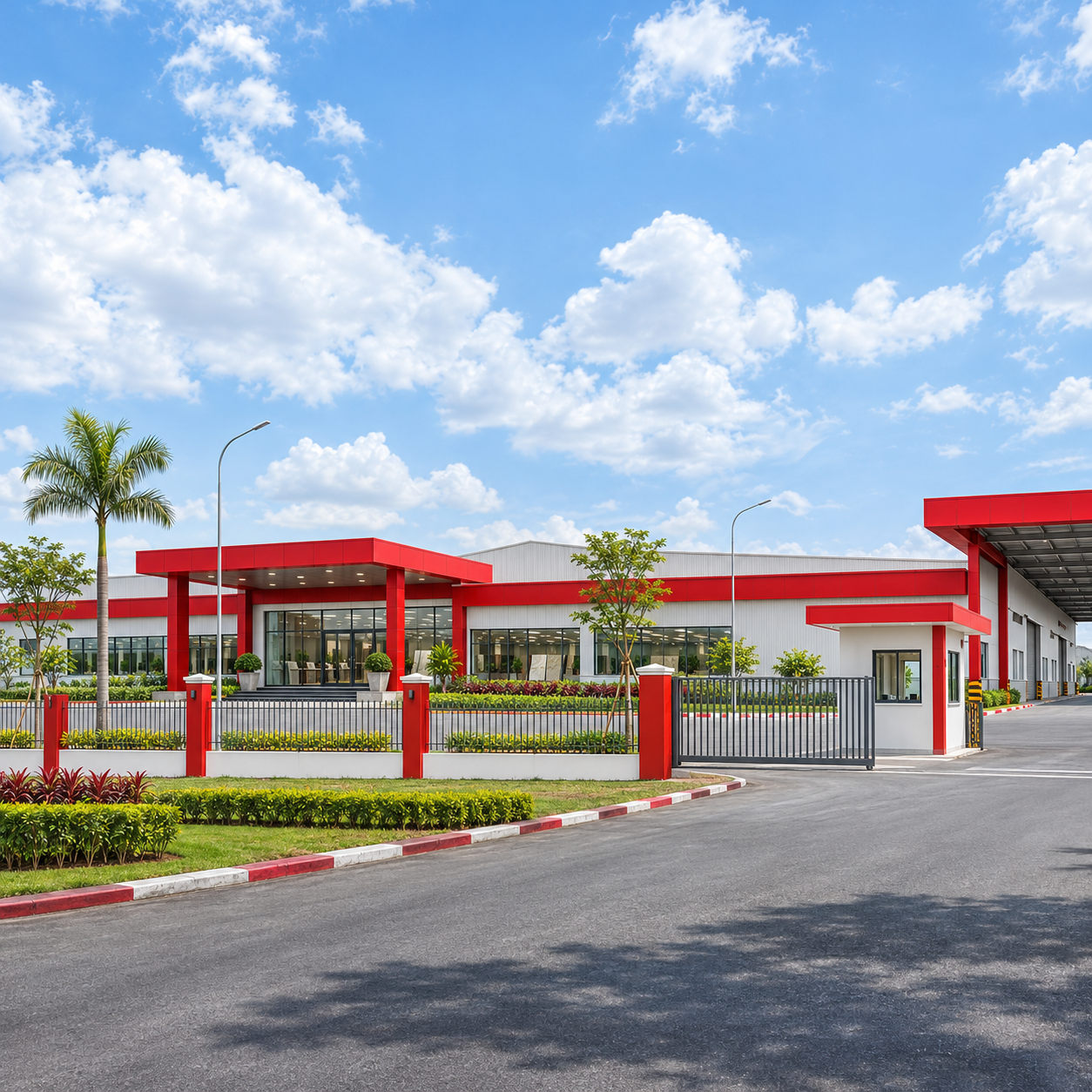
Container transportation in a port environment rarely follows a fixed point-to-point journey. A trip may require trailer detachment, an empty-container return, an additional hub, a different tractor or driver, or changes to the original route. When orders, trip status, documents and cost information are managed through multiple channels, maintaining operational control becomes increasingly difficult.
Transport Management System Smartlog TMS was implemented to centralize dispatch, transport monitoring, documentation and cost data while supporting the operational realities of container transportation and port logistics.
ABOUT OUR CUSTOMER
Our customer operates a Class I seaport in Southern Vietnam within the ecosystem of a major Vietnamese group with more than 55 years of development.
The port has a planned area of 147 hectares, currently operates seven berths with approximately 1,670 meters of continuous berth length, and can accommodate general cargo vessels of up to 70,000 DWT. Its infrastructure also includes extensive warehouse and container-yard facilities supporting large-scale logistics operations.
The service ecosystem spans port operations, warehousing, road transportation, barge transportation and international freight forwarding, serving containers, general cargo, bulk commodities and a wide range of industrial cargo.
Within the Smartlog project, the primary focus is container transport and fleet execution, where orders, drivers, tractors, trailers, containers, documentation and trip costs need to be managed together.
OPERATING CONTEXT
Before Smartlog TMS, transport orders were received through email, much of the operational coordination relied on messaging channels, and vehicle, trip, document and cost information had to be consolidated from multiple sources.
The nature of FCL/LCL transportation means that actual execution can differ significantly from the original plan. A container may be moved to a yard for trailer detachment before final delivery and later generate an empty-return movement. Some trips may also require an additional hub, vehicle change, driver change or route adjustment.
Each change affects trip status, mileage, documentation, driver compensation and actual cost. If system records do not reflect what happened in the field, post-trip reconciliation can easily become inconsistent.
KEY CHALLENGES
Container transport involved frequent execution exceptions
Trailer detachment, empty returns, additional hubs, container coupling, internal shuttling and vehicle changes could all alter the original transport plan.
Dispatch and documentation were fragmented
Email, messaging channels and separate records required teams to continually reconcile information across orders, trips, drivers, vehicles and container documents.
Cost management needed to reflect actual trips
Fleet management goes beyond knowing where a vehicle is. The business also needs to connect actual transport activity with fuel, maintenance, driver compensation, revenue and vehicle performance.
SMARTLOG’S APPROACH
Smartlog implemented Transport Management System Smartlog TMS as a container transport execution system, with a strong focus on keeping system data aligned with actual field operations.
Centralizing orders and transport dispatch
Orders, trip plans, owned vehicles and outsourced transport resources are managed within a common environment, providing dispatch teams with a more consolidated view of resources and execution status.
Supporting container-specific operations
Smartlog TMS was adapted to support scenarios such as hub movements, trailer detachment, empty-container returns, container coupling, internal shuttling, vehicle changes, driver changes and route adjustments.
This allows trip records to remain aligned with actual execution instead of being restricted to the original transport plan.
Connecting field execution with operational data
Mobile applications support status updates during execution. GPS, mileage and document data can also be associated with trips, creating a more structured basis for monitoring and reconciliation.
Extending control to cost and vehicle performance
Smartlog TMS supports requirements around billing, trip-based driver compensation, fuel, maintenance and vehicle/trip-level P&L, bringing operational and financial data closer together.
RESULTS
During live operations, Smartlog system continued to be refined around the specific requirements of port logistics and container transportation.
Scenarios involving hub movements, trailer detachment, empty-container returns and container-level documentation were incorporated into the operating scope according to actual business requirements.
At the management level, maintenance, fuel and vehicle/trip-level P&L reports were also completed within the project scope.
The project therefore provides a stronger foundation for connecting transport orders with actual trip execution, drivers, vehicles, containers, supporting documents and associated costs. Operations teams can manage dispatch and post-trip reconciliation using a more structured and consistent source of information.
BUSINESS VALUE
In container transportation, an effective management system needs to answer much more than “Where is the truck?”
The business also needs to understand how each container actually moved, how tractors and trailers were used, whether drivers or vehicles changed, which documents were generated and how these events affected actual trip cost.
Transport Management System Smartlog TMS provides a more structured foundation for port and logistics operators to manage these relationships while building better data for fleet control, cost reconciliation and trip-performance management.
Leave us a message, and we’ll get in touch with you!
Smartlog team will contact you within 24 business hours for consultation
- #logistics
- #transportmanagementsystem
- #tms
- #smartlog
- #transportdigitaltransformation

Comments (0)
No comments yet. Be the first to comment.