
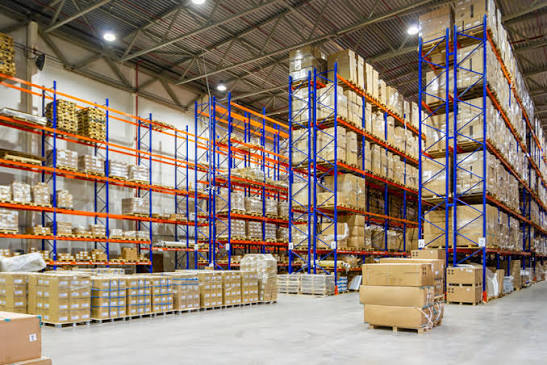
For electronics and home-appliance warehousing, inventory control goes far beyond knowing how many units are available. Operations also need to know where each item is located, which pallet it belongs to, which serial/IMEI identifies it and which rule should govern its outbound allocation. At our customer’s approximately 5,000 m² distribution center, warehouse processes previously relied on Excel, internal software and paper documents, while outbound serial data had to pass through multiple tools before being shared with customers. Smartlog Warehouse Management (SWM) was implemented to bring inbound, storage and outbound execution onto one centralized platform with more detailed product-level control.
ABOUT OUR CUSTOMER
Our customer is the Vietnamese subsidiary of a Japan-headquartered logistics group with more than 50 years of experience and an international network spanning Asia, Europe and North America.
The group provides a broad range of logistics services, including transportation, warehousing, international forwarding, customs clearance and logistics consulting. In Vietnam, the company operates transportation and warehousing services across different product categories, including electronics and home appliances.
The SWM project focused on a distribution center comprising two warehouses, six inbound/outbound doors and approximately 5,000 m² of operating space, handling products such as refrigerators, washing machines, air conditioners, small appliances and audio-visual equipment.
With high-value products and many items managed by individual Serial/IMEI, the operation requires deeper control than conventional quantity-based inventory management.
OPERATING CONTEXT
Before Smartlog SWM, many warehouse activities still depended on a combination of Excel, internal software and paper documents.
Inbound operations did not have a centralized receiving plan by invoice, while some transactions were not recorded immediately when they occurred. Pallet identification and storage-location labeling were also not fully standardized.
Outbound operations involved even more manual work. Consolidated picking quantities had to be calculated manually, while scanned serial data moved from an internal application to Google Docs and then to Excel before being shared with customers.
FIFO allocation was also not system-driven, requiring additional checking and decision-making from warehouse employees before goods could be released.
KEY CHALLENGES
Inbound, outbound and inventory data were fragmented
Warehouse information was handled across multiple tools and documents, making it difficult to maintain one consistent source of operational data.
Outbound control relied heavily on manual work
Consolidated picking documents required manual calculation, while FIFO allocation was not fully supported by the existing workflow.
Serial/IMEI data was disconnected from end-to-end warehouse execution
Product-identification data had to move through several intermediate tools, adding extra steps and limiting direct traceability within one system.
SMARTLOG’S APPROACH
Smartlog implemented SWM as the central warehouse execution platform, connecting receiving, storage, picking and outbound activities.
Centralizing inbound, outbound and inventory control
Warehouse transactions are managed through SWM, bringing inventory, pallet and location data into a more unified operating environment instead of relying on disconnected spreadsheets and paper documents.
Standardizing picking and FIFO
SWM supports structured picking and FIFO-based outbound allocation, reducing the need for manual calculation and product selection during order preparation.
Managing Serial/IMEI within warehouse execution
Serial and IMEI information can be captured and traced directly in SWM across receiving, storage, picking and outbound activities, reducing the need for multiple intermediate data-processing steps.
Bringing digital execution to the warehouse floor
Mobile applications and handheld devices support receiving, put-away, inventory checking, picking, IMEI scanning and outbound activities, allowing information to be captured closer to the point of execution.
RESULTS
SWM has been brought into operation across the confirmed implementation scope, including inbound, outbound, inventory, Serial/IMEI management, mobile applications, reports, dashboards, user permissions and master data.
A key transformation is the move from a process dependent on Excel, paper documents, internal applications and manual serial-data conversion toward a centralized warehouse management platform.
Inbound, outbound and inventory activities are managed through a more structured workflow; FIFO is incorporated into system-based execution; Serial/IMEI can be traced directly; and operational information is more centrally available for monitoring and reporting.
BUSINESS VALUE
In electronics warehousing, inventory control is not simply about knowing how many units remain in stock. Businesses also need to know which exact unit is being handled, where it is located, which serial number identifies it and how it has moved through the warehouse.
Smartlog Warehouse Management System SWM brings these data points into one operating flow, reducing dependence on intermediate files and manual processes.
This gives logistics businesses a stronger foundation for controlling electronics and home-appliance inventory while maintaining the traceability required as warehouse operations scale.
Leave us a message, and we’ll get in touch with you!
Smartlog team will contact you within 24 business hours for consultation
- #smartlog
- #logistics
- #digitaltransformation
- #wms
- #swm
- #warehousemanagement

Comments (0)
No comments yet. Be the first to comment.